Oops! Something went wrong while submitting the form.
By providing a telephone number and submitting this form you are consenting to be contacted by SMS text message. Message & data rates may apply. You can reply STOP to opt-out of further messaging.
Workforce Trends
Technology Jobs Report June 2024
Decline in Temporary Services overshadows modest tech gains — total technology employment may have shrunk by 37,000 positions.
Praveen Ghanta, CEO, Hire Fraction·July 5, 2024·5 min read
tech jobsworkforce trendsBLS jobs reporttemporary services
What you’ll learn
Why the June 2024 net tech job loss reached an estimated 37,000 despite gains in software and cloud
Which five subsectors Fraction tracks in the monthly BLS Employment Situation report
How each subsector performed in June 2024 — from Telecom’s decline to Software’s continued growth
What the Indeed postings index at 69 means for tech hiring relative to pre-pandemic levels
Where technology employment stands in the long-term trend since its 2022 peak
While employment in the overall US economy is growing, technology continues to lag. The June 2024 BLS Jobs Report shows a net contraction of roughly 37,000 tech positions — with Temporary Professional Services erasing modest gains posted elsewhere in the sector.
What happened to technology employment in June 2024?
Technology employment may have shrunk by as many as 37,000 jobs in June 2024. The headline number is almost entirely a function of one category: Temporary Professional Services, which shed 45,600 positions in the month. Many workers in that category fill technology-related contract and contingent roles, making its decline a direct signal of tightening demand for flexible tech headcount.
The rest of the tech subsectors told a more resilient story. Three of the five areas Fraction monitors posted gains, and none of the remaining declines were large enough to shift the overall picture without the temporary services collapse.
Data note
Fraction tracks technology employment by monitoring five subsectors in the monthly BLS Employment Situation report: Telecommunications; Hosting and Cloud Infrastructure; Web Portals and Information Sites; Computer Software and Consulting; and Temporary Professional Services. The last category is included because a substantial share of temporary professional employees work in technology roles.
How did each technology subsector perform in June 2024?
The five subsectors moved in different directions in June 2024. Here is the breakdown:
Subsector
BLS Category (Table B-1)
June 2024 Change
Telecommunications
Telecommunications
−1,300
Hosting + Cloud Infrastructure
Computing infrastructure providers, data processing, web hosting, and related services
+1,000
Web Portals + Information Sites
Web search portals, libraries, archives, and other information services
+1,100
Computer Software + Consulting
Computer systems design and related services
+7,400
Temporary Professional Services
Employment services under Professional and Business Services
−45,600
Telecommunications fell by 1,300 positions, continuing a long-term contraction in that industry that has been underway for years. Hosting and Cloud Infrastructure grew by 1,000, and Web Portals and Information Sites added 1,100 jobs. Computer Software and Consulting continued its upward trajectory with 7,400 new positions — the only subsector adding jobs at meaningful scale.
Temporary Professional Services absorbed all of those gains and more, with a single-month loss of 45,600. That category encompasses a wide range of contract workers, many placed in technology and engineering roles. Its decline reflects the broader pullback in contingent and project-based tech hiring that has been a consistent theme since 2022.
Hiring senior tech talent on a flexible basis?
Fraction places US-based senior engineers, designers, and growth operators with a 7-day risk-free trial. No lock-in, no offshore surprises.
Start building with Fraction in as little as one week.
What does the Indeed job postings index show for tech in June 2024?
Indeed tracks job posting levels across sectors using an index benchmarked to February 2020. The index for technology-related postings was at 69 in June 2024 — meaning posting activity was 31% below where it was just before the pandemic.
Month-over-month, postings were relatively flat from May to June 2024. That flatness comes after a steep decline from the highs of early 2022, when tech hiring was at its most aggressive. The trajectory has been roughly sideways for the past several months with no meaningful recovery signal in the posting data.
An index level of 69 indicates that despite the software subsector’s continued gains in BLS employment counts, companies are not yet expanding the top of their hiring funnels at a rate consistent with a recovery.
Where does technology employment stand in the long-term trend?
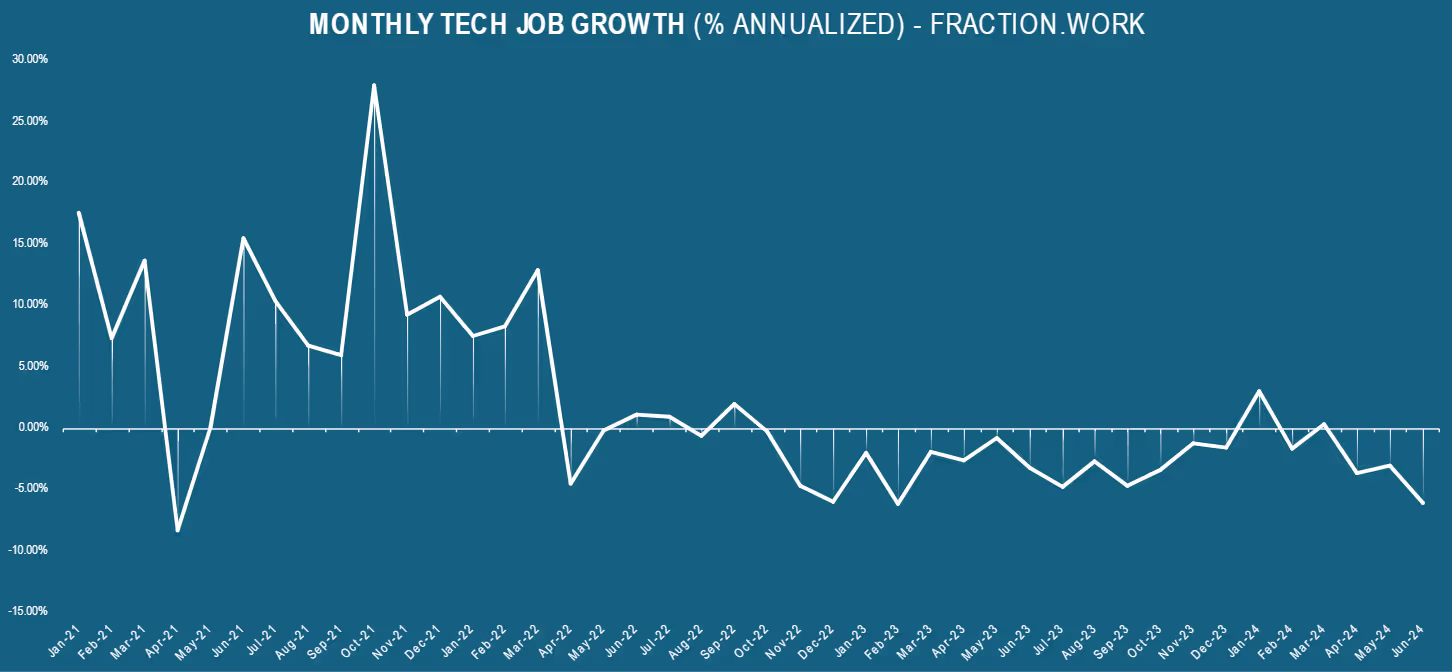
The long-term view of BLS technology employment data, compiled by Fraction, shows a sector that peaked in 2022 and has been declining since. As of June 2024, there is no visible rebound in the data — the slow downward drift from the 2022 high has not reversed.
The pattern reflects what happened across the industry in 2022 and 2023: a wave of over-hiring during the pandemic boom, followed by a prolonged correction as companies right-sized their workforces. Contract and temporary employment was the first to expand during the boom and the first to contract during the correction.
Software and cloud employment have held up better than telecommunications and temporary services, but those segments alone are not large enough to offset losses elsewhere. The sector as a whole remains in net contraction on a year-over-year basis.
What does this data mean for technology workers and hiring managers?
For technology workers, the June 2024 report reinforces that the contract and temporary market remains under pressure. Full-time roles in software and cloud have been more resilient, but the overall demand signal — as measured by Indeed postings — is still well below the levels that defined the 2021–2022 hiring peak.
For hiring managers and business leaders, the data suggests that accessing senior technology talent through flexible arrangements requires a different approach than it did two years ago. Supply of available talent has improved from the scarcity of the peak, but the market for contract and temporary technology workers is being reshaped by companies pulling back on contingent headcount in favor of smaller, more permanent teams.
The computer software and consulting subsector’s continued growth of 7,400 jobs in June indicates that demand for permanent software talent remains intact. Companies hiring for full-time technical roles are finding a less competitive market than they faced in 2021 and 2022.
Frequently asked questions
How many tech jobs were lost in June 2024?
Technology employment may have shrunk by as many as 37,000 jobs in June 2024. The net decline was driven almost entirely by a drop of 45,600 positions in Temporary Professional Services, which more than offset modest gains in software, cloud infrastructure, and web portals.
Why did temporary professional services employment fall so sharply in June 2024?
Temporary Professional Services — which includes many contract technology workers — fell by 45,600 positions in June 2024. This reflects the ongoing reduction in contract and contingent tech hiring that accelerated after the 2022 peak, as companies that over-hired during the pandemic era continued to scale back flexible headcount.
Which tech subsectors added jobs in June 2024?
Three subsectors added jobs in June 2024: Hosting and Cloud Infrastructure gained 1,000 positions, Web Portals and Information Sites added 1,100 jobs, and Computer Software and Consulting continued its upward trend with 7,400 new positions. Telecommunications declined by 1,300, continuing a long-term contraction.
What does the Indeed job postings index show for tech in June 2024?
Indeed’s job postings index for technology stood at 69 in June 2024, meaning posting levels were 31% below February 2020 baselines. Postings were relatively flat month-over-month from May to June, after a steep decline from the highs of early 2022.
Has technology employment recovered since its 2022 peak?
No. As of June 2024, BLS data shows that technology employment has continued to decline from its 2022 peak without a clear rebound trend. While software and cloud hiring have shown modest resilience, the losses in temporary and contract employment have kept the overall trajectory negative.
How does Fraction track technology employment each month?
Fraction monitors five subsectors in the monthly BLS Employment Situation report: Telecommunications; Hosting and Cloud Infrastructure (computing infrastructure providers, data processing, and web hosting); Web Portals and Information Sites (web search portals, libraries, and archives); Computer Software and Consulting (computer systems design and related services); and Temporary Professional Services (employment services under Professional and Business Services).
Praveen Ghanta is a five-time founder and serial entrepreneur. He is the founder of DevHawk.ai, an AI-powered engineering management platform, and Fraction.work, which connects fast-growing companies with top fractional tech and growth marketing talent. Previously, he founded HiddenLevers, a risk analytics platform for wealth management that he bootstrapped from inception to acquisition by Orion Advisor Solutions in 2021, serving thousands of advisors and $600B in assets. He earlier founded SmartWorkGroups, acquired by Intralinks in 2000.
Describe your software or AI project. Get a full scope with story-point pricing, sprint estimates, and a downloadable plan in minutes. No calls, no waiting.