Oops! Something went wrong while submitting the form.
By providing a telephone number and submitting this form you are consenting to be contacted by SMS text message. Message & data rates may apply. You can reply STOP to opt-out of further messaging.
AI Tools
What Is Agentic AI? A Business Leader's Guide to Autonomous AI Systems
Agentic AI is software that plans, decides, and acts on goals without being told each step. A plain-language guide for business leaders on what it actually is, what it costs, and where to start.
Praveen Ghanta, CEO, Hire Fraction·March 17, 2026·5 min read
agentic AIAI agentsautonomous AIAI strategy
What you’ll learn
The real difference between a chatbot, a copilot, and an AI agent — and why confusing them leads to scoping mistakes
What agentic AI looks like at each level of complexity, described in terms an operator would recognize
Why Gartner predicts over 40% of agentic AI projects will be canceled by 2027 — and how to avoid that outcome
What single-task, orchestrated, and multi-agent systems cost, and which tier most companies actually need
Five questions to answer before you evaluate any agentic AI vendor or framework
If you’re a business leader in 2026, you’ve heard “agentic AI” in board meetings, vendor pitches, and LinkedIn posts from consulting firms. The term is new, the definitions are inconsistent, and the marketing is aggressive. Here’s what it actually means — and what you need to know before spending money on it.
What is agentic AI, and how is it different from regular AI?
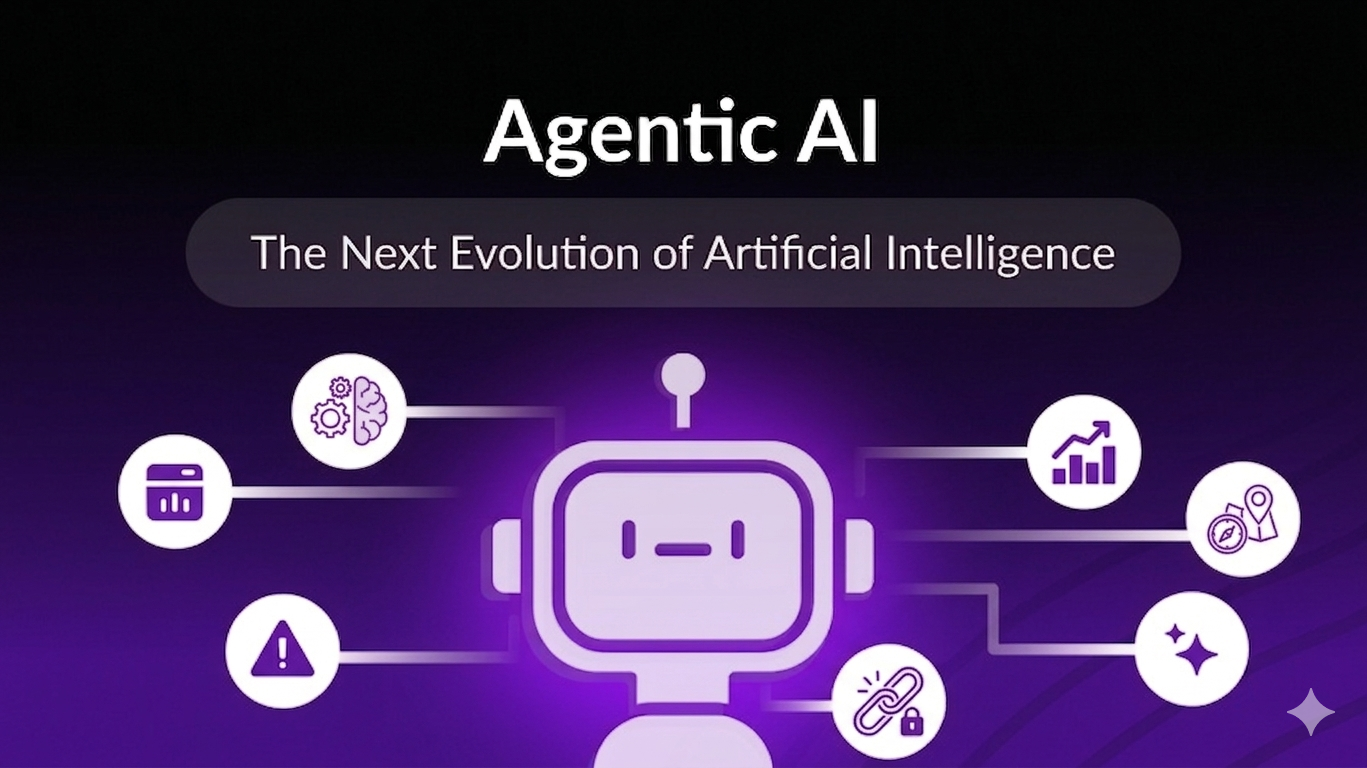
Agentic AI is software that can plan, decide, and act on a goal without being told each step. You give it an objective, and it figures out how to get there — using tools, checking results, adjusting its approach, and reporting back when it is done or when it hits a decision it cannot make alone.
That sounds like a chatbot. It is not. The difference is whether the system responds or acts. A chatbot answers. An agent executes. And that distinction matters if you are about to spend money on it.
Definition
Agentic AI: a software system that can pursue a multi-step goal autonomously — perceiving context, planning a sequence of actions, using tools (search, code execution, API calls), evaluating results, and adjusting its approach — without requiring a human to specify each step. Distinct from a chatbot (which responds) or a copilot (which assists while a human acts).
What is the difference between a chatbot, a copilot, and an AI agent?
These three terms get used interchangeably in sales conversations. They should not be. They describe three different levels of capability, and confusing them is one of the fastest ways to scope an AI project wrong.
A chatbot answers questions. You ask it something, it responds based on rules or a language model. It does not take action. It does not remember what you asked last week. It does not go do something on your behalf. It is a conversational interface, useful for FAQs and simple support triage, but reactive by design.
A copilot assists you while you work. It sits inside an application, pulls context, drafts content, suggests next steps. Microsoft Copilot in Excel is a copilot. GitHub Copilot for coding is a copilot. The key distinction: a copilot suggests, but a human decides and acts. It makes you faster. It does not do the work for you.
An agent acts. You tell an agentic system to research 50 competitor pricing pages, extract pricing tiers, compare them to yours, and draft a pricing recommendation memo. It does all of that. A copilot would help you write the memo after you did the research yourself. An agent does the research, the analysis, and the first draft, then surfaces the result for your review.
Type
What it does
Who acts
Best for
Chatbot
Responds to questions based on rules or a language model
Human
FAQs, simple support triage
Copilot
Suggests drafts, next steps, or analysis while you work
Human
Writing, coding, in-app assistance
Agent
Plans, executes, and completes multi-step workflows autonomously
AI
Delegated workflows, complex automation
What does agentic AI actually look like inside a business?
Abstract definitions are less useful than concrete examples. Here is what agentic AI looks like at each level of complexity, described in terms a non-technical operator would recognize.
Single-task agents handle one job with one tool. Summarize every document in a shared folder. Classify incoming support tickets by category and urgency. Generate a weekly report from a data source. These are narrow, repetitive tasks that a person currently does manually. A single-task agent does them faster, more consistently, and around the clock. Cost is low. Timeline is days to weeks. This is where most companies should start.
Orchestrated agents handle multi-step workflows. Research a topic, draft a brief, route it for review, incorporate feedback, publish the final version. Or: ingest data from three sources, run an analysis, flag anomalies, generate an alert, recommend an action. The agent coordinates multiple steps in sequence, making decisions along the way about what to do next. Cost is moderate. Timeline is weeks. This is where value starts compounding, because you are automating a process, not just a task.
Multi-agent systems involve multiple specialized agents working together. One agent handles data ingestion. Another runs analysis. A third generates reports. A fourth distributes them. Each agent has a defined role, and an orchestration layer coordinates them. Cost is significant. Timeline is months. This is the category that gets the most press and the least actual deployment.
Where is the hype in agentic AI, and where is the actual value?
Gartner predicts that 40% of enterprise applications will embed task-specific AI agents by the end of 2026, up from less than 5% in 2025. That is a bold forecast, and the vendor ecosystem is building toward it.
But here is the counterweight: Gartner also predicts that over 40% of agentic AI projects will be canceled by the end of 2027 due to escalating costs, unclear business value, or inadequate risk controls. In their own words, most agentic AI projects right now are early-stage experiments driven by hype, and organizations risk stalling when they discover the real cost and complexity of deploying agents at scale.
McKinsey’s November 2025 survey gives a clearer picture of where adoption actually stands. About 62% of organizations are experimenting with agents. But only 23% have begun scaling them in even one business function. Experimentation is widespread. Production deployment is not.
This gap matters for you as a buyer because it means the market is flooded with agentic AI pitches, and most of the pitching organizations have limited production experience. The vendor selling you a multi-agent system may have built demos but deployed very few to production environments with real data, real users, and real consequences.
Not sure which AI tier fits your workflow?
Fraction’s senior engineers scope AI projects at all three tiers. Get a project plan and cost estimate in minutes.
Does your company actually need a multi-agent system?
This is worth saying directly because the narrative in enterprise AI right now skews heavily toward the most complex, most expensive implementations.
Most companies will get more value from a well-built single-task agent or an orchestrated workflow than from a multi-agent system. The company that automates support ticket triage and saves 15 hours a week is capturing more real value than the company that spends six months architecting a multi-agent platform that never ships.
The companies rushing to build multi-agent systems before they have a single agent in production are making a classic mistake: treating AI as a technology project instead of a business process change. They are building the architecture before they have confirmed the business case.
A useful rule: if you can describe the workflow in a single sentence (“classify these tickets,” “draft these reports,” “route these inquiries”), you probably need a single-task agent. If you can describe it in a paragraph, you might need an orchestrated agent. If it takes a page, you are in multi-agent territory — and you should be very sure the business case justifies the complexity.
What should you ask before evaluating any agentic AI solution?
If you are considering agentic AI for your business, the first question is not “which framework should we use?” or “which vendor has the best agents?” The first question is: which workflow, if automated end-to-end, would move a business metric?
That question forces you to identify a specific process — not a category like “customer experience” but a workflow like “incoming support ticket triage and routing” — and to connect the automation to a measurable outcome.
From there, five questions help you evaluate whether agentic AI is the right approach:
Is the workflow repeatable and rule-based enough for an agent to handle? Agents work best on processes that follow a definable pattern. If every instance requires unique human judgment, an agent will either fail or need constant supervision, which defeats the purpose.
Do you have the data the agent needs? An agent that routes support tickets needs access to your ticketing system, customer data, and historical routing decisions. If that data is fragmented or locked inside systems the agent cannot access, you have a data problem to solve before an agent problem.
What happens when the agent is wrong? Every agent will make mistakes. The question is: what is the consequence? Misclassifying a support ticket is low stakes. Approving a loan application incorrectly is not. Design for the failure mode, not just the success case.
Can you measure the outcome? If you cannot measure whether the agent improved the workflow, you cannot justify the investment and you cannot tell if it is working. Define the metric before you start building.
Are you starting with one agent or jumping to a system? Start with one. Prove value. Then expand. This is not timidity — it is the pattern that organizations with successful agentic deployments follow consistently.
How much do the three tiers of agentic AI cost to build?
If you are budgeting for agentic AI and evaluating vendors, here is a rough framework for what each tier costs and how long it takes. These are ranges based on market rates, not fixed quotes.
A single-task agent (classify tickets, summarize documents, generate reports from data): $5K to $25K, delivered in days to weeks. This is the right starting point for most first-time AI buyers. Low risk, fast time to value, easy to measure.
An orchestrated agent (multi-step workflow: research, draft, review, publish; or ingest, analyze, alert, recommend): $10K to $50K, delivered in weeks. This is where you start automating a process rather than a task. The cost depends on how many systems the agent needs to integrate with and how complex the decision logic is.
A multi-agent system (multiple specialized agents coordinating across a workflow): $50K to $200K+, delivered over months. This is appropriate for complex, high-value workflows in organizations that have already proven the business case with simpler agents. Most companies are not here yet, and that is fine.
Fraction helps buyers figure out which tier makes sense for their business, then builds it. The process starts with the question above: which workflow, if automated, would move a metric? From there, the Fraction project planner breaks the build into feature areas with story point ranges and cost bands. You see what you are paying for before you commit.
We build agents at all three tiers. But we will tell you if a single-task agent solves your problem and a multi-agent system is overkill. The goal is the right solution for the workflow, not the most impressive architecture.
Frequently asked questions
What is agentic AI in plain language?
Agentic AI is software that can plan, decide, and act on a goal without being told each step. You give it an objective, and it figures out how to get there — using tools, checking results, adjusting its approach, and reporting back when it is done or when it hits a decision it cannot make alone. The core distinction from a chatbot or copilot is that an agent acts; it does not merely respond or suggest.
What is the difference between a chatbot, a copilot, and an AI agent?
A chatbot answers questions reactively. A copilot assists while a human works — suggesting drafts, next steps, or analysis — but a human still decides and acts. An agent completes a workflow on your behalf: it researches, decides, executes, and surfaces results for your review. A copilot saves you time on a task you are already doing. An agent completes a workflow you would have delegated to a person.
Does my company actually need a multi-agent system?
Almost certainly not yet. Most companies will get more value from a well-built single-task agent or an orchestrated workflow than from a multi-agent system. The rule of thumb: if you can describe the workflow in a single sentence, you probably need a single-task agent. If it takes a paragraph, an orchestrated agent may fit. If it takes a page, you are in multi-agent territory — and you should be very sure the business case justifies the complexity before you start building.
How much does it cost to build an AI agent?
Single-task agents (classify tickets, summarize documents, generate reports) typically run $5K to $25K and deliver in days to weeks. Orchestrated agents handling multi-step workflows cost $10K to $50K and take weeks. Multi-agent systems coordinating several specialized agents run $50K to $200K or more and take months. These are market-rate ranges, not fixed quotes, and depend heavily on integration complexity and decision logic.
What is the most important question to ask before building an AI agent?
Which workflow, if automated end-to-end, would move a business metric? That question forces you to identify a specific process — not a category like “customer experience” but a workflow like “incoming support ticket triage and routing” — and to connect the automation to a measurable outcome. Without a clear answer to this question, you are building technology for its own sake rather than solving a business problem.
Why do so many agentic AI projects get canceled?
Gartner predicts over 40% of agentic AI projects will be canceled by end of 2027 due to escalating costs, unclear business value, or inadequate risk controls. The most common failure pattern is treating AI as a technology project instead of a business process change — building the architecture before confirming the business case. Organizations that start with a specific workflow and a measurable outcome, prove value at small scale, and then expand are far more likely to ship something that sticks.
Praveen Ghanta is a five-time founder and serial entrepreneur. He is the founder of DevHawk.ai, an AI-powered engineering management platform, and Fraction.work, which connects fast-growing companies with top fractional tech and growth marketing talent. Previously, he founded HiddenLevers, a risk analytics platform for wealth management that he bootstrapped from inception to acquisition by Orion Advisor Solutions in 2021, serving thousands of advisors and $600B in assets. He earlier founded SmartWorkGroups, acquired by Intralinks in 2000.
Describe your software or AI project. Get a full scope with story-point pricing, sprint estimates, and a downloadable plan in minutes. No calls, no waiting.