Oops! Something went wrong while submitting the form.
By providing a telephone number and submitting this form you are consenting to be contacted by SMS text message. Message & data rates may apply. You can reply STOP to opt-out of further messaging.
Case Study
ViVE 2023 Sponsor: Fraction at Nashville's Health Tech Conference
Fraction joined emerging digital health startups on the ViVE 2023 sponsor floor — here is what the conference signals about where health tech engineering is heading.
Praveen Ghanta, CEO, Hire Fraction·March 13, 2023·4 min read
Why ViVE attracts the decision-makers who control engineering budgets at digital health companies
The specific engineering constraints — EHR integrations, FHIR APIs, compliance overhead — that make fractional senior talent especially valuable in health tech
How Fraction’s embedded model differs from traditional healthcare IT staffing and offshore contractor models
What types of health tech product work Fraction’s engineers have shipped for clients
How to evaluate whether a fractional engineering engagement is a fit for your digital health company’s current stage
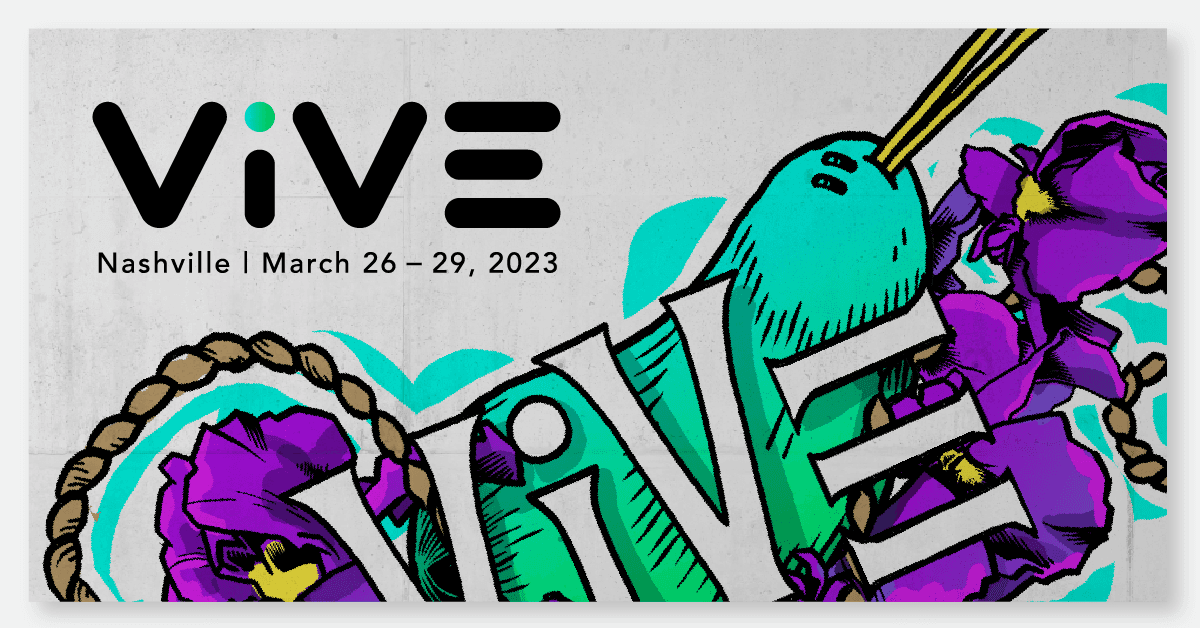
Fraction joined emerging startups at ViVE 2023 in Nashville, Tennessee on March 26–29 as a sponsor. Visit our kiosk on the sponsor floor and see the full list of sponsors at the official ViVE sponsor page.
What is ViVE and why does it matter for digital health companies?
ViVE is the healthcare technology industry’s premier conference for digital innovation. Unlike broader health events, ViVE is specifically focused on the intersection of technology and healthcare delivery — bringing together health system executives, digital health startup founders, venture investors, and enterprise technology vendors under one roof.
Definition
ViVE: an annual healthcare technology conference co-produced by CHIME (College of Healthcare Information Management Executives) and the Healthcare Information and Management Systems Society (HIMSS). It focuses on digital health innovation, interoperability, and technology leadership. The 2023 edition was held in Nashville, Tennessee from March 26–29.
ViVE draws CIOs, CTOs, and heads of digital transformation from major health systems, alongside founders and product leaders from digital health companies at every stage from seed through growth. The sponsor floor is where vendors — from established enterprise software companies to early-stage startups — showcase products and make connections with decision-makers who control engineering and technology budgets.
For a company like Fraction, ViVE is a natural fit. The digital health sector is full of product teams that need senior engineering horsepower but operate under the same budget constraints as any other software company — often with the added complexity of healthcare-specific compliance requirements, integration standards, and procurement cycles.
Why does Fraction sponsor health tech conferences like ViVE?
The health tech sector has a specific talent problem. Building in healthcare requires engineers who understand not just software development, but the particular demands of the environment: EHR integrations, HL7 and FHIR API standards, HIPAA-adjacent data handling, and the careful stakeholder management that clinical software deployments require.
These engineers are expensive to hire full-time. And because the work is often project-intensive — a new integration here, a data pipeline rebuild there — carrying full-time senior engineers on payroll creates significant overhead when the project mix fluctuates. This is exactly the problem the fractional model was built to solve.
Fraction’s team includes engineers who have worked on healthcare data platforms, telehealth products, and administrative automation software. The embedded model — where a Fraction engineer joins a team’s standup, owns deliverables, and operates as a de facto team member rather than an arms-length contractor — is particularly well suited to the kind of nuanced, judgment-heavy work that health tech product development requires. This is the same pattern that has worked for complex API integration work in regulated industries like insurance.
What are the specific engineering challenges that make digital health so hard to build in?
Digital health companies face a cluster of engineering constraints that most SaaS companies do not. The most common ones we hear from teams at events like ViVE:
EHR integration complexity. Epic, Cerner, and other major EHR platforms have integration APIs that are notoriously opaque. Building reliable, production-grade integrations requires engineers who have done it before and understand where the edge cases live. Junior developers struggle here — the documentation is insufficient and the institutional knowledge is hard to transfer.
FHIR API implementation. The industry has moved toward FHIR (Fast Healthcare Interoperability Resources) as the standard for health data exchange. Implementing FHIR correctly — including the resource modeling, security, and versioning considerations — requires specific experience that not all software engineers have.
Compliance overhead. Building software that touches patient data introduces compliance requirements that slow down development when they are not planned for properly. Teams that bring in engineers with healthcare experience early spend less time retrofitting compliance controls later.
Clinical workflow integration. The people who use health tech products are often clinicians, not technical users. Product decisions that feel obvious from a software engineering perspective can fail when they do not account for the cognitive load of a physician mid-shift. Senior engineers who have shipped in this context understand why the product decisions are what they are.
Building a digital health product?
Get a scoped project plan from Fraction’s senior engineers — no calls, no waiting. Understand the full build before you commit to a team.
How does the fractional engineering model work for digital health companies?
Fraction’s model is distinct from traditional healthcare IT staffing in one key way: the engineers are embedded, not arms-length. A Fraction engineer joins the team’s existing workflow — their Slack, their sprint planning, their code review process. They take ownership of deliverables rather than just completing task tickets.
The practical result is that a digital health company gets the output of a senior engineer — architecture decisions, API design, integration leadership — without the cost of carrying a full-time senior hire through periods when the workload does not justify it. The engagement scales up when there is a major integration to ship, and scales back when the team needs to focus on other areas.
For health tech companies in particular, the ability to bring in engineers who have done this specific work before — EHR integrations, FHIR implementations, telehealth platform architecture — accelerates timelines significantly. The alternative, training a generalist engineer on healthcare-specific constraints while simultaneously shipping product, is slow and expensive. Teams that have worked with us on similar high-complexity integration projects — like the application upgrade work Fraction did for FundEasy — recognize the same pattern: senior experience in context is worth multiples of raw engineering hours.
If you are building in digital health and want to understand what a Fraction engagement could look like for your team’s current sprint priorities, the best starting point is a project scope — not a sales call.
Frequently asked questions
What is ViVE and who attends it?
ViVE is a leading annual healthcare technology conference focused on digital health innovation, bringing together executives, investors, and builders from across the healthcare sector. Attendees include health system leaders, digital health startup founders, venture capitalists, and enterprise technology vendors. The event features keynotes, workshops, and an exhibit floor where companies showcase products and services relevant to healthcare transformation.
Why did Fraction sponsor ViVE 2023?
Fraction sponsored ViVE 2023 to connect with digital health companies that need senior engineering talent without the cost of full-time hires. Healthcare technology teams face the same build-vs-hire tradeoffs as any SaaS company, but operate under additional compliance and integration constraints. Fraction’s fractional model — embedding senior engineers, designers, and operators directly into product teams — is particularly well suited to health tech companies scaling quickly under budget pressure.
What types of health tech companies work well with Fraction?
Fraction works best with digital health companies that have product-market fit and need to scale their engineering output without doubling their headcount. This includes companies building EHR integrations, telehealth platforms, healthcare analytics tools, and administrative automation software. The fractional model is a strong fit when the work requires senior judgment — architecture decisions, data pipeline design, API integrations — rather than junior execution.
How does fractional engineering work for healthcare startups specifically?
Fractional engineers at Fraction embed directly into a health tech company’s existing workflow — attending standups, using the team’s project management tools, and owning deliverables end-to-end. They bring experience with HIPAA-adjacent data handling, HL7/FHIR integrations, and the compliance considerations that slow down healthcare software development. Because they are senior practitioners, they can make judgment calls that junior contractors cannot, without requiring the overhead of a full-time hire.
What is the difference between a fractional engineer and a contractor?
A traditional contractor is typically scoped to a specific task and works at arm’s length from the team. A fractional engineer at Fraction is embedded — they operate as a de facto team member, participate in planning, shape technical decisions, and take ownership of outcomes rather than just deliverables. The difference is the depth of integration and the seniority of the practitioner. Fraction’s engineers have typically held staff or principal roles at software companies before joining the fractional model.
Can Fraction help a health tech company that is pre-revenue?
Fraction works best with companies that have achieved some initial product-market signal and need to accelerate development or expand capability, rather than very early-stage teams still defining the product. For pre-revenue companies with a clear build plan and investor backing, Fraction can still be a fit — the model works whenever a company needs experienced senior talent without the risk of a permanent hire. The best starting point is a project scoping conversation to assess whether the work and team structure align.
Praveen Ghanta
CEO, Hire Fraction
Praveen Ghanta is a five-time founder and serial entrepreneur. He is the founder of DevHawk.ai, an AI-powered engineering management platform, and Fraction.work, which connects fast-growing companies with top fractional tech and growth marketing talent. Previously, he founded HiddenLevers, a risk analytics platform for wealth management that he bootstrapped from inception to acquisition by Orion Advisor Solutions in 2021, serving thousands of advisors and $600B in assets. He earlier founded SmartWorkGroups, acquired by Intralinks in 2000.
Describe your software or AI project. Get a full scope with story-point pricing, sprint estimates, and a downloadable plan in minutes. No calls, no waiting.