Oops! Something went wrong while submitting the form.
By providing a telephone number and submitting this form you are consenting to be contacted by SMS text message. Message & data rates may apply. You can reply STOP to opt-out of further messaging.
Fractional Hiring
Why Fractional Hiring Is the Solution to the "Talent Wars"
The competitive bidding war for senior developers is a problem you can sidestep entirely — if you know where to look.
Praveen Ghanta, CEO, Hire Fraction·October 24, 2022·5 min read
fractional hiringtalent warsstartup hiringremote work
What you’ll learn
Why the “Talent Wars” framing misses the real opportunity for startup founders
How remote work unlocked a new pool of senior developer talent for startups
Why fractional hiring reduces financial and hiring risk in an uncertain economy
How candidate risk aversion makes fractional work attractive for senior engineers
Why fractional hiring often serves as the best audition for a future full-time hire
Venture Atlanta 2022 put the “Talent Wars” on center stage. But the real story — the one most founders missed — was that the traditional hiring model is the problem, not the talent market itself. Fractional hiring is the peaceful exit from the war.
What did Venture Atlanta 2022 reveal about the state of startup hiring?
Venture Atlanta 2022 was an impressive showcase of Atlanta’s rising startup stars and a reflection of the city’s thriving tech ecosystem. Alongside the pitches, VentureATL offered panel discussions on the most pressing issues facing the tech industry: leading through difficult financial environments, navigating the economy, and hiring and retaining top talent.
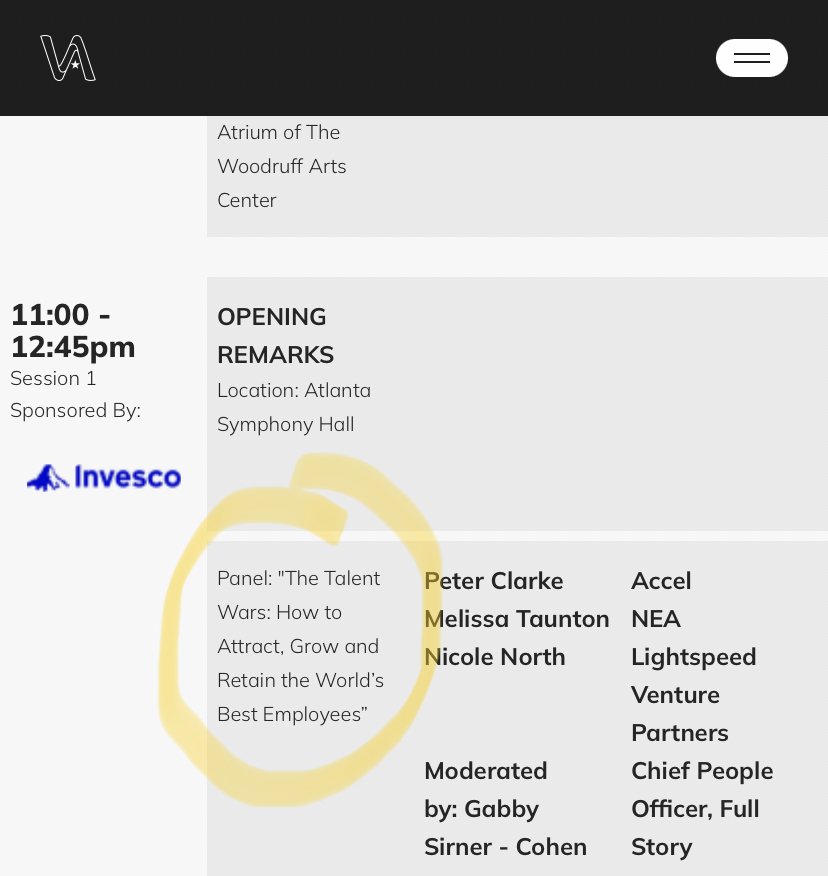
The panel was aptly titled “Talent Wars: How to Attract, Grow and Retain the World’s Best Employees” to reflect the competitive tech hiring landscape and the trends driving employee decisions. The discussion highlighted important issues — and it also revealed that most founders are fighting for talent using the same playbook at the same time, which is precisely what makes it a war.
Definition
Fractional hiring: bringing on a senior professional — developer, CTO, designer, or operator — on a part-time, embedded basis rather than as a full-time employee. Unlike a contractor working on a fixed deliverable, a fractional hire works inside your team, contributes ongoing work, and can be converted to full-time when the time is right.
How has remote work changed who is available for startup hiring?
The panel’s central message on workplace structure: one size does not fit all, and founders should be flexible with their employees’ needs when deciding how to structure work options.
Remote work has unlocked opportunities not seen in the pre-COVID era. For software developers, the potential to expand their talent horizons into new industries without relocating has been enormous. A senior engineer in Atlanta can now contribute meaningfully to a startup in San Francisco, Seattle, or Austin without any of the friction that previously made that impossible.
More importantly for founders, remote work enables fractional work. A developer can hold a full-time remote position and still have enough schedule flexibility to take on a meaningful part-time engagement at a startup — something that was essentially impossible in a traditional five-days-per-week in-office environment. Remote work did not just expand where talent could work; it expanded how talent could work.
Looking for senior developer talent?
Fraction embeds senior engineers, designers, and operators inside your team on a fractional basis. No bidding war required.
Why does economic uncertainty make fractional hiring more attractive for founders?
The panel noted a counterintuitive dynamic: economic downturns do not necessarily make hiring easier. Some high-performing talent — especially executives — remove themselves from the market because they are inundated by recruiters. Others decide it is the right time to join a startup because that is “what is interesting to them.” But the demand for the best candidates does not drop proportionally to headcount reductions.
In uncertain economic times, developers have a chance to not only pursue something interesting but also secure another form of income. Fractional work with a startup lets a developer maintain their current full-time role while supplementing their income — a meaningful benefit when the economic outlook is uncertain.
For founders, the math is equally compelling. Leaning into fractional hiring opens up the possibility of working with full-time senior developers without paying substantial overhead costs. Benefits, payroll taxes, bonus, and equity can easily add up to a third of base salary on top of the wage itself. Fractional arrangements let you access the same senior capability at a fraction of the loaded cost — which matters enormously when you are managing burn rate carefully.
Factor
Full-time hire
Fractional hire
Loaded cost
Base salary + ~33% overhead (benefits, taxes, bonus, equity)
Hourly or retainer — no overhead add-on
Time to productivity
Weeks to months of onboarding
Days — senior talent hits the ground running
Risk if it doesn’t work
Severance, lost recruiting cost, delayed roadmap
End engagement — no severance, minimal disruption
Access to talent pool
Only candidates actively job-seeking
Senior engineers not on the job market at all
Path to full-time
N/A — starts as full-time
Built-in audition period before full offer
How does fractional hiring reduce the risk that makes candidates hesitant to join startups?
The panel identified a real friction point: financial concerns make candidates risk-averse when considering a switch to a startup role. Recruiting is a major part of a founder’s job, but it is also critical to find a path forward that makes sense for both sides. It is genuinely hard to switch to a new role — and it is especially hard if you have a family, a mortgage, and benefits you depend on.
Fractional work mitigates that risk for both developers and founders. For developers, they can maintain their full-time role and benefits while taking on an interesting startup engagement that offers supplemental income. The financial safety net stays in place. The career risk is near zero. The upside — interesting work, startup equity in some cases, and resume diversification — is real.
For founders, the fractional model solves the evaluation problem that makes full-time hiring so high-stakes. You can access a new source of senior developer talent and see how they mesh with your team before extending a full-time offer. The onboarding cost for a future conversion is near zero — the person already knows your codebase, your team, and your processes. The decision to go full-time, when it comes, is made with complete information on both sides.
Why is “Talent Wars” the wrong frame for thinking about startup hiring?
We agree with panelist Peter Clarke, a Talent Partner at VC firm Accel, that the zero-sum framing of “Talent Wars” is too combative and does not properly humanize the hiring process. Competing to outbid other companies for the same narrow pool of candidates is expensive, inefficient, and ultimately unsustainable for most startups.
Employees have free will. Founders and employers should be amenable to the interests of their people — including their interest in contributing beyond their current role. Fractional hiring for high-performing senior software developers is both cost-effective for founders and genuinely beneficial for developers. It also enables developers to pursue an interest without leaving the safety of a larger company, which in turn makes more senior talent available to the startup ecosystem as a whole.
As Peter said, “Recruiting is hard… but is not an unsolvable problem.” Taking a fractional hiring approach helps bridge the gap between high-performing senior engineers and the startups that need them — without anyone having to win a bidding war.
Frequently asked questions
What is fractional hiring and how does it differ from traditional hiring?
Fractional hiring means bringing on a senior professional — such as a developer, CTO, or designer — on a part-time, embedded basis rather than as a full-time employee. Unlike a contractor or consultant who works on a deliverable, a fractional hire works inside your team, attends standups, and contributes ongoing work. The key difference from traditional hiring is cost and commitment: you get senior talent without the full-time salary, benefits, payroll taxes, and equity overhead.
How does fractional hiring reduce risk for startup founders during uncertain economic times?
Fractional hiring lets founders access senior developer talent without committing to the full cost of a new hire. Full-time overhead — benefits, payroll taxes, bonus, and equity — can add up to a third of base salary on top of the wage itself. Fractional arrangements let you test the fit with a team member before extending a full-time offer, reducing both financial risk and the risk of a bad hire. During economic downturns when burn rate management is critical, fractional gives you senior capability at a fraction of the cost.
Why do senior developers choose fractional work over full-time roles?
Senior developers choose fractional work because it lets them maintain their current full-time role and income security while taking on an additional engaging engagement at a startup. It offers the best of both worlds: financial stability from a large employer plus the excitement of working on something new and entrepreneurial. Remote work has made this possible at scale — a developer no longer has to relocate or quit their job to contribute meaningfully to a startup.
How does remote work enable the fractional hiring model?
Remote work removed the geographic constraint that previously required employees to be physically present. For software developers, this expanded the talent pool dramatically — a developer in Atlanta can contribute to a startup in San Francisco without moving. More importantly, remote work enables fractional work: a developer can hold a full-time remote position and still have enough flexibility to take on a meaningful part-time engagement at a startup, something impossible in a five-days-per-week in-office environment.
Is fractional hiring only for early-stage startups, or can growth-stage companies use it too?
Fractional hiring works at multiple stages. Early-stage startups use it to access senior talent before they can afford full-time senior engineers. Growth-stage companies use it to fill specific skill gaps — a fractional CTO to provide technical leadership, a fractional data engineer to build out an analytics pipeline — without adding permanent headcount to their org chart. The model scales up and down with your needs, which makes it useful whenever you need senior capability without the full-time commitment.
Can fractional hires eventually convert to full-time employees?
Yes, and many do. Fractional engagements often serve as an extended audition for both sides. The founder gets to see how a developer works inside their team before committing to a full-time hire. The developer gets to assess the company culture, codebase, and team before making the leap. When both sides are satisfied, converting a fractional hire to full-time is straightforward — and the onboarding cost is near zero because the person already knows the product, the team, and the processes.
Praveen Ghanta
CEO, Hire Fraction
Praveen Ghanta is a five-time founder and serial entrepreneur. He is the founder of DevHawk.ai, an AI-powered engineering management platform, and Fraction.work, which connects fast-growing companies with top fractional tech and growth marketing talent. Previously, he founded HiddenLevers, a risk analytics platform for wealth management that he bootstrapped from inception to acquisition by Orion Advisor Solutions in 2021, serving thousands of advisors and $600B in assets. He earlier founded SmartWorkGroups, acquired by Intralinks in 2000.
Describe your software or AI project. Get a full scope with story-point pricing, sprint estimates, and a downloadable plan in minutes. No calls, no waiting.